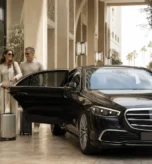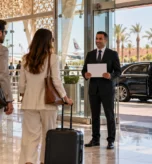

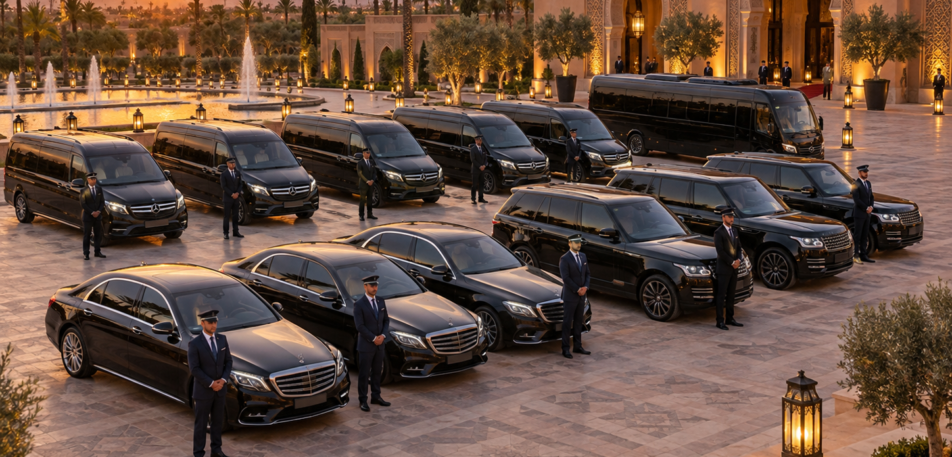
Transport is part of a Marrakech corporate event long before the first speaker takes the stage. Guests fly into Marrakech-Ménara Airport, stay in multiple hotels and travel between conference rooms, dinners and meetings. Coordinating these movements is different from booking a single airport car. A practical event transport Marrakech plan must assign vehicles to timed routes, explain pickup points and handle delays without leaving attendees confused. This guide is for conference organizers, incentive planners, business delegations and DMC partners who want a clear movement plan instead of a vague promise of luxury transportation.
Quick answer: How should you plan corporate event transport in Marrakech? Map flights, hotels and venues, group passengers into practical arrival waves, assign suitable vehicles to realistic time windows, and appoint one dispatch contact to manage changes.
Map every hotel, airport and venue
Write down exact addresses for Marrakech-Ménara Airport, hotel entrances, conference facilities and dinner locations. Distinguish Gueliz and Hivernage roads from more restricted Medina approaches. Create a simple table with passengers, start and end points, departure time and assigned vehicle. If two journeys overlap, they cannot safely depend on a single driver being in both places at once. The map should include agreed stopping areas and the time guests need to reach their venue after leaving the vehicle.
Manage arrivals in waves
Delegates arriving at RAK may leave immigration and baggage collection at different times even when their flights land close together. Record flight numbers, passenger counts, group leads and luggage details. Agree where the driver will meet the party and how delays are reported. Hotel assignments can determine whether arrivals are efficiently grouped or should travel separately. Never set a transfer departure purely from the scheduled landing time without leaving room for airport formalities and group assembly.
Separate hotel shuttles from VIP movements
A timed shuttle loop between hotels and a conference facility is operationally different from an executive vehicle that follows one guest’s itinerary. Speakers may need to arrive for a specific presentation, while delegates can follow an advertised departure timetable. Clarify which journeys are individual, which are shared and whether vehicles must remain on standby. Schedule enough time for passenger boarding and vehicle repositioning. A premium nameplate will not repair a timetable that expects a vehicle to return instantly.
Match each group to a realistic vehicle
Passenger capacity must be considered alongside luggage, mobility and the access roads. A group of six conference delegates with briefcases is not equivalent to six international arrivals with large cases. Ask the supplier for actual vehicle configuration and storage, and separate airport logistics from venue shuttles where necessary. Some groups may need a people carrier and others a larger minibus. Don’t assign excess bags to occupied passenger space or assume a particular vehicle model is available on every date.
Check entrances and permitted stopping points
A venue in the historic Medina may not permit a vehicle to reach the door, while modern hotels may offer a dedicated arrival area. Confirm the correct drop-off, any waiting restrictions and the walk from the vehicle to the entrance. This is especially important for evening events and guests unfamiliar with Marrakech. If mobility support is required, coordinate it directly with the venue and provider. A promise of door-to-door service must reflect the actual local access conditions.
Use one dispatch owner for updates
Events inevitably change. Flights run late, sessions overrun and a restaurant may alter its table time. Name one transport lead who can approve revisions and issue instructions to affected drivers. Every update should identify the vehicle, passenger group, pickup location and new time. Ask recipients to acknowledge changes instead of sending contradictory messages from different teams. The DMC transport manifest guide provides a useful model for documenting movements and revisions.
Plan executive journeys with care
Senior visitors may value discreet pickups, a quiet cabin and arrival timing aligned with meetings rather than a group shuttle. Ask what privacy arrangements and driver contact procedures can be provided instead of assuming special security or amenities are standard. A small dedicated vehicle may be a better solution than moving a nearly empty bus. The executive chauffeur travel guide explains considerations for business transport within Morocco.
Compare supplier quotations on equivalent scope
Send each provider the same details: event dates, passenger groups, flight arrivals, hotels, venues, required departure windows and expected vehicle hours. Ask about standby, tolls, waiting, late changes and any after-hours requirements. One quote may cover only individual journeys while another provides dedicated shuttles and a coordinator. A low headline price does not demonstrate better value unless the actual movements and conditions match. Record who will approve extra journeys and how these are billed.
Give attendees simple, usable instructions
Guests should receive the correct hotel pickup point, departure time, vehicle meeting details and emergency contact. Avoid giving them the entire dispatcher spreadsheet. If several hotels are involved, issue venue-specific notes rather than a single ambiguous map. The official Moroccan tourism guide to Marrakech is useful for general city orientation, but only the organizer and the actual venue can confirm the event’s pickup logistics. Recheck these before circulating final invitations.
Close out movements and confirm the next day
At the end of each transfer wave, identify arrivals, no-shows and passengers needing a revised journey. This prevents a missed guest from being incorrectly marked as collected. At day end, compare actual vehicle hours with the plan, resolve pending changes and distribute the next day’s confirmed manifest. The process need not be complicated: one accurate schedule and one source of operational truth are more valuable than many scattered messages. Confirm the supplier’s availability before promising additional transfers.
Frequently Asked Questions
What belongs in a corporate event transport manifest?
List flights, passengers, hotels, venues, departure times, vehicle assignments, luggage and an escalation contact.
Can one shuttle serve several hotels?
Possibly, if the stops, vehicle access, loading and timetable make the route workable.
Do executives need a separate chauffeur?
Dedicated travel can help with differing schedules or privacy needs, but depends on the booking.
What happens if a guest’s flight is delayed?
Apply the agreed waiting policy and have the dispatcher revise the affected movement.
Can coaches enter every Marrakech venue?
No. Narrow or restricted roads may require a separate approved pickup or drop-off point.
How do I request a transport quotation?
Send the full movement plan, dates, group sizes and service requirements for operator confirmation.
Prepare a Reliable Marrakech Event Transport Brief
Successful group travel starts with realistic routes and written expectations. Confirm the number of vehicles, actual waiting arrangements, passengers, timings and price with the operator before you send details to delegates. Contact Le VIP Morocco with your event timetable to request an availability-based proposal for the passenger movements you need.